Contents
The Indian social media landscape is currently in the grip of a massive and controversial trend that has dominated search engines and timeline discussions for the past 72 hours. A specific search term—”19 minutes viral video”—has skyrocketed on platforms like Google, X (formerly Twitter), and Instagram, unleashing a storm of speculation, misinformation, and cyber risks.
What began as whispers about an alleged leaked private video involving an unidentified couple has snowballed into a complex digital crisis. The incident has moved beyond mere voyeurism to encompass serious issues of mistaken identity, online harassment, malware distribution, and the terrifying potential of AI-generated deepfakes.
As of December 4, 2025, the controversy shows no signs of slowing down, prompting cyber experts and legal authorities to issue stern warnings to the public.
Here is a comprehensive report on the “19-minute video” phenomenon, the innocent lives caught in the crossfire, and why searching for this content could land you in legal trouble or compromise your digital security.
The Anatomy of the Trend: What is Happening?
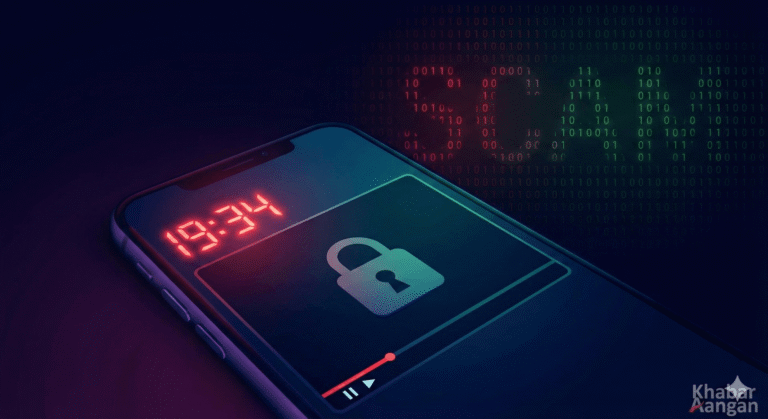
The frenzy started earlier this week when rumors of a private video, allegedly 19 minutes and 34 seconds in duration, began circulating on encrypted messaging apps and social media. The clip reportedly features a young couple in an intimate setting.
While such leaks are unfortunately not uncommon in the digital age, the specificity of the duration—”19 minutes”—became a viral hook.
Within hours, “19 minutes” became a shorthand meme on Instagram Reels and Twitter threads. Users who had not even seen the video began using the hashtag to farm engagement, creating a feedback loop that pushed the topic to the top of trending lists. The curiosity gap—where people feel the need to know what everyone else is talking about—drove millions of users to search engines, looking for the “original link.”
However, unlike previous viral incidents where a clear source is identified, this trend is mired in confusion. There are conflicting reports about the origin of the video, with some claiming it is an old clip resurfacing and others suggesting it is a completely fabricated narrative designed to trigger clicks.
The Human Cost: Influencer “Sweet Zannat” Wrongly Targeted
The most damaging aspect of this viral storm has been the rampant misinformation and “witch hunt” mentality it has spawned. As internet sleuths scrambled to identify the woman in the alleged video, a popular Instagram influencer known as “Sweet Zannat” became the target of a vicious harassment campaign.
Due to a vague facial resemblance claimed by some users, thousands of people flooded Zannat’s comment sections with derogatory remarks, referencing the “19-minute” video. The harassment reached such a peak that the Meghalaya-based content creator was forced to issue a public clarification to clear her name.
In a video statement that has now been viewed millions of times, Zannat addressed the trolls directly. She urged her followers to look closely, pointing out distinct physical differences between herself and the woman in the viral screenshots. She also highlighted a linguistic discrepancy, noting that the woman in the video speaks English, a language Zannat admitted she is not fluent in.
Her candid and humorous handling of the situation—joking that the internet was making her famous for free—won her support, but it highlighted a terrifying reality: anyone can become collateral damage in a viral leak, regardless of the truth.
The “Link” Trap: A Goldmine for Scammers
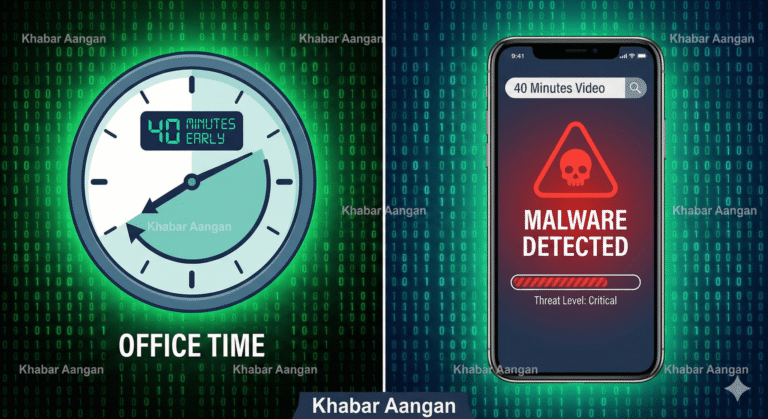
While social media users treat the trend as entertainment, cybercriminals view it as a lucrative opportunity. Cybersecurity firms have reported a sharp spike in malicious phishing links masquerading as the “full 19-minute video.”
Scammers are flooding comment sections on Telegram, Facebook, and X with suspicious URLs. These links often promise access to the uncensored footage but instead redirect users to phishing sites designed to steal login credentials or install malware on their devices. In some cases, users are asked to pay a small fee (ranging from ₹500 to ₹5000) to join a “premium” channel to watch the video, only to be scammed out of their money.
Tech experts warn that clicking on these “leaked video” links is one of the fastest ways to compromise your phone’s security. These downloads often contain spyware that can access your banking apps, gallery, and contacts. The obsession with finding the video is blinding users to basic digital hygiene, making them easy prey for financial fraud.
Is It Real or AI? The Deepfake Debate
A growing theory among digital investigators is that the video—or at least parts of the narrative—may not be genuine. With the rapid advancement of Generative AI, creating realistic deepfake videos has become alarmingly easy.
Some reports suggest that the “19-minute” clip could be an AI-generated fabrication or a “deepfake” where the faces of random individuals are superimposed onto existing adult content. The presence of “Season 2” and “Season 3” rumors associated with the same trend further points to a coordinated bot campaign rather than a genuine leak.
This possibility adds a dystopian layer to the scandal. If the video is indeed AI-generated, it means we have entered an era where non-existent scandals can be manufactured to ruin reputations or generate ad revenue. The inability of the average user to distinguish between real and AI-generated content is fueling the spread of such controversies.
The Legal Consequences: Jail Time for Sharing
Amidst the meme-fest, many users are forgetting the serious legal implications of their actions. In India, sharing, transmitting, or even publishing sexually explicit material is a criminal offense under the Information Technology (IT) Act, 2000.
Section 67A of the IT Act specifically deals with the publishing or transmitting of material containing sexually explicit acts in electronic form. The punishment for a first-time conviction can be imprisonment of up to five years and a fine of up to ₹10 lakh.
Authorities have warned that “sharing” includes forwarding the video on WhatsApp, retweeting it, or uploading it to a cloud drive. Ignorance of the law is not a valid defense. Furthermore, if the video is found to be non-consensual (revenge porn) or involves any form of morphed imagery (deepfakes), additional sections of the Indian Penal Code (IPC) related to defamation and voyeurism can be invoked.
Police cyber cells in states like Maharashtra and Delhi are reportedly monitoring social media platforms to track the source of the leak and identify those actively distributing the content.
The Psychology of “Link Begging”
This incident has once again exposed the dark underbelly of internet culture: the “Link Begging” phenomenon. On almost every post related to the controversy, the comment sections are filled with users asking, “Link please?” or “Send me the video.”
Psychologists attribute this to a combination of voyeurism and the “Fear Of Missing Out” (FOMO). In the digital age, being “in the know” about a viral trend is seen as social currency. However, this behavior dehumanizes the subjects of the video. Whether the couple is real or the content is a deepfake, the collective internet is participating in the violation of privacy for momentary entertainment.





The normalization of asking for non-consensual private content reflects a severe lack of digital empathy. It turns a potential crime scene into a spectator sport, where the victims’ dignity is secondary to the thrill of the “leak.”
What Should You Do?
If you encounter posts or links related to the “19-minute viral video,” the safest course of action is to ignore them. Do not click on suspicious links, as they are likely traps. Do not share or forward any content, as you could unwittingly become part of a chain of distribution that law enforcement is tracking.
For those who have shared the video or are actively searching for it, it is a reminder that the digital footprint is permanent. Deleting a message does not remove the record from the server or the metadata that links it to your device.
Conclusion: A Wake-Up Call for Digital India
The “19 minutes viral video” saga is more than just a fleeting internet trend; it is a mirror reflecting the vulnerabilities of our digital society. It exposes how easily misinformation spreads, how quickly innocent people like Sweet Zannat can be targeted, and how eager the public is to consume private content without a second thought for ethics or the law.
As AI technology creates more convincing fakes and cybercriminals become more sophisticated, the responsibility falls on the user to exercise caution. The next time a “viral scandal” breaks, the question shouldn’t be “Where is the link?”, but rather “Is this safe, and is this true?”
- Why is Donald Trump Targeting Greenland? The Shocking Truth Behind the ‘10% Tariff’ Threat
- Is the New Vande Bharat Sleeper Better Than Rajdhani?
- Why is Kane Williamson Trending?
- Is HDFC Bank’s 11% Profit Jump a Sign of Strength or a Trap? Q3 Results Decoded
- Is the New Bajaj Chetak C2501 the ‘Ola Killer’ You Were Waiting For?
Disclaimer: This article reports on a current social media trend and is for educational and informational purposes only. It does not contain, link to, or promote explicit material. The sharing of non-consensual private content is a criminal offense under Indian law. We strongly advise readers to avoid clicking on unverified links to protect their digital security
READ MORE

Why is Donald Trump Targeting Greenland? The Shocking Truth Behind the ‘10% Tariff’ Threat
The US President has just declared an economic war over an island! Why is the world fighting for a frozen land? The secret lies buried under the ice.
Is the New Vande Bharat Sleeper Better Than Rajdhani?
The Rajdhani killer is finally here! India’s first “Hotel on Wheels” launched today. But there is one strict booking rule that will shock you.
Why is Kane Williamson Trending?
The legend is missing from the India series, and the reason is shocking. Is Kane Williamson silently walking away from New Zealand cricket?
Is HDFC Bank’s 11% Profit Jump a Sign of Strength or a Trap? Q3 Results Decoded
The giant has spoken! HDFC Bank posts an 11% profit jump, but a hidden ₹800 Cr cost has surprised everyone. Is the stock a buy or a trap for Monday?

Is the New Bajaj Chetak C2501 the ‘Ola Killer’ You Were Waiting For?
The Chetak is finally cheap, but at what cost? A new motor, slower speed, and different design—is the new C2501 a smart deal or a trap?
Is the Redmi Note 15 Pro+ the Ultimate ‘Flagship Killer’ of 2026?
The King is back! A 6500mAh battery, 200MP camera, and ‘Titan’ body. Is the Redmi Note 15 Pro+ the phone you have been waiting for?





About the Author

📢 Click here for instant updates:
📲 Join us on WhatsApp