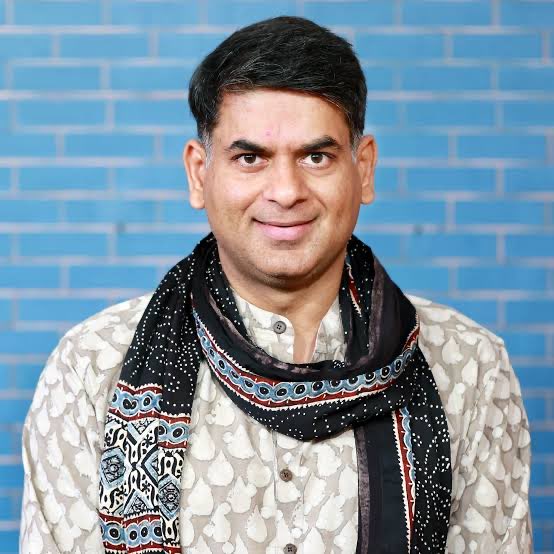
In a significant legislative move that challenges India’s bustling “hustle culture,” Nationalist Congress Party (SP) MP Supriya Sule has introduced the “Right to Disconnect Bill, 2025” in the Lok Sabha. Introduced on Friday, December 5, 2025, this private member’s bill seeks to grant employees the legal right to ignore work-related calls, emails, and messages outside of their designated office hours. The proposed legislation comes at a time when the debate over work-life balance in India has reached a fever pitch, following controversial discussions about extended work weeks.
The bill aims to curb the growing epidemic of “telepressure”—the urge to respond to work communications immediately—and protect workers from the mental and physical toll of constant connectivity. If passed, it would fundamentally reshape the employer-employee dynamic in India’s corporate sector, mandating strict boundaries between professional duties and personal time.
The Core Proposal: Legal Protection for Personal Time
The primary objective of the Right to Disconnect Bill, 2025, is to give every employee the statutory right to “disconnect” from work-related electronic communications after work hours and during holidays. This means that an employee cannot be disciplined or penalized for refusing to answer a boss’s phone call or reply to an email once their shift is over.
Supriya Sule argued that while digital technology has provided flexibility, it has also eroded the line between work and home. The bill mandates that companies must negotiate “out-of-hour” service conditions with their employees. It recognizes that if an employee agrees to work outside standard hours, they must be compensated. The bill proposes overtime pay at the same rate as the employee’s standard wage for any work performed during these disconnected hours.
Strict Penalties for Non-Compliance
One of the most striking features of the bill is the introduction of financial penalties for non-compliant companies. The legislation proposes that entities (companies or societies) that fail to respect the right to disconnect provisions could face sanctions.
Specifically, the bill seeks to impose a penalty amounting to 1% of the total remuneration of the company’s employees for any violation of the bill’s provisions. This steep penalty is designed to act as a strong deterrent against the casual intrusion into employees’ private lives that has become common in many sectors, particularly IT and finance.
By attaching a financial cost to the violation of personal time, the bill attempts to force organizations to take work-life boundaries seriously. It shifts the burden of responsibility from the employee, who often fears saying “no,” to the employer.
Combating “Info-Obesity” and Burnout
In the “Statement of Objects and Reasons” for the bill, Sule highlighted the health risks associated with the modern “always-on” culture. She introduced terms like “info-obesity” and “telepressure” to the parliamentary discourse.
“Info-obesity” refers to a condition where an employee’s brain becomes overtaxed by the constant monitoring of work-related messages and emails. The bill argues that this digital overload leads to severe stress, sleep deprivation, and emotional exhaustion.
The legislation posits that the persistent urge to check emails on weekends and holidays has effectively destroyed the work-life balance of millions of Indians. By legally recognizing the right to disconnect, the bill seeks to reduce this stress and ease the tension between personal and professional lives.
Institutional Support: Welfare Authorities and Detox Centers
The bill goes beyond just setting rules; it proposes an infrastructure to support this cultural shift. It mandates the establishment of an Employees’ Welfare Authority. This body would be tasked with overseeing the implementation of the right to disconnect and ensuring that employees are not coerced into working after hours.
Furthermore, the bill includes unique provisions for mental health support. It calls for the government, in consultation with companies, to provide counseling services to increase awareness about the reasonable use of digital tools.
Perhaps the most novel proposal is the establishment of “Digital Detox Centers”. These centers would be set up to help employees free themselves from digital distractions and truly connect with the people around them, providing a physical space to unplug and recharge.
The Context: The “70-Hour Work Week” Debate
The introduction of this bill stands in stark contrast to recent comments made by prominent industry leaders. Infosys founder N.R. Narayana Murthy recently triggered a nationwide debate by suggesting that young Indians should work 70 hours a week to boost the country’s productivity.
While some business leaders supported the call for harder work, it faced severe backlash from employees and health experts who cited rising cases of burnout and heart attacks among young professionals. The Right to Disconnect Bill serves as a legislative counter-argument to the “hustle” narrative. It prioritizes the well-being of the workforce over sheer output.
Sule’s bill argues that productivity does not come from longer hours but from a rested and mentally healthy workforce. It aligns with global research suggesting that overworking leads to diminishing returns and higher healthcare costs for companies in the long run.
Global Precedents: Following the World’s Lead
India is not the first country to consider such a law. The bill brings India in line with a growing global movement to protect workers’ rights in the digital age. Australia recently enacted similar “Right to Disconnect” laws in 2024, joining over two dozen countries that have regulations in place.
France was a pioneer in this regard, implementing its right to disconnect law back in 2017. Other European nations like Spain, Italy, and Belgium have also introduced similar measures to safeguard their citizens’ private time.
By introducing this bill, Supriya Sule is attempting to modernize India’s labor laws to match these international standards. As India positions itself as a global economic powerhouse, the debate is shifting towards whether its labor standards should also reflect “first-world” protections.
Challenges for Private Member’s Bills
It is important to note that the Right to Disconnect Bill, 2025, is a Private Member’s Bill. These are bills introduced by MPs who are not ministers in the government.
Historically, private member’s bills rarely become law in India. Parliament typically discusses them on Fridays, and they are often withdrawn after the government gives a response or assurance. Since independence, only 14 such bills have been passed, with the last one being in 1970.





However, even if the bill does not pass, its introduction is significant. It forces the government and the parliament to debate the issue formally. It brings the conversation about toxic work culture into the highest legislative body in the country, potentially paving the way for future government-backed legislation.
The Road Ahead for Indian Employees
The introduction of the bill has already sparked intense discussions on social media and corporate forums. Employees in the IT and services sectors, who often work late nights to cater to global clients, are particularly invested in the outcome.
Critics of the bill argue that in a competitive economy like India, strict disconnect laws could hinder business growth and reduce flexibility. They contend that for startups and small businesses, the ability to be responsive around the clock is often a survival necessity.
Proponents, however, maintain that without legal protection, the “always-on” culture will lead to a public health crisis. They argue that the bill introduces necessary friction to stop the exploitation of digital connectivity.
As the Winter Session of Parliament continues, all eyes will be on whether this bill gets taken up for discussion. Regardless of its legislative fate, the Right to Disconnect Bill, 2025, has successfully disconnected the silence around workplace burnout.
Related Disclaimer: This article reports on a Private Member’s Bill introduced in the Lok Sabha. The bill is currently a proposal and has not yet been enacted into law. The details mentioned are based on the draft legislation presented in Parliament.
About the Author

📢 Click here for instant updates:
📲 Join us on WhatsApp