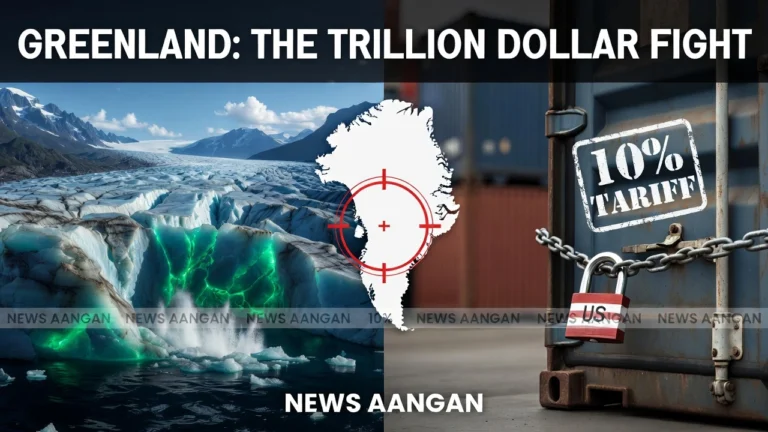
The world is currently witnessing a diplomatic collision in the frozen North that has pushed the Arctic circle to its breaking point. As of January 5, 2026, the leadership in Nuuk and Copenhagen has issued a blistering response to escalating pressure from Washington, marking a historic rift between long-standing allies.
But what exactly triggered the sudden surge in annexation rhetoric, and why has a simple territorial dispute suddenly become a centerpiece of global national security?
With the recent military shifts in South America still fresh in the headlines, the question for Greenland is no longer just about its ice, but about its right to exist as a sovereign people.
The tension has reached a fever pitch following specific social media posts and high-level interviews that suggest the map of the Arctic might be forcibly redrawn. From the strategic fjords to the halls of the European Union, the resistance to this movement is shaping up to be the most significant geopolitical battle of the year.
Enough is Enough: Prime Minister Nielsen’s Sharp Rebuke
Greenland’s Prime Minister, Jens-Frederik Nielsen, broke his silence today with a bracingly direct statement that has resonated across the Nordic nations. He accused the United States of “completely unacceptable” rhetoric, declaring that the era of treating the island as a pawn in great-power politics must come to an end.
This response comes on the heels of renewed threats of annexation, which Nielsen described as “fantasies” that have no place between friends. The Prime Minister’s firm stance is a clear signal that the people of the North are prepared to defend their status under international law, regardless of the economic or military pressure applied.
The statement emphasized that while Greenland remains open to dialogue, it will not be coerced into any agreement that disregards its democratic status. The sentiment was echoed by Danish Prime Minister Mette Frederiksen, who urged a total halt to threats against a historically close ally.
Strategic Value: Why the Arctic has Become a National Security Goal
The sudden urgency surrounding the territory is driven by a complex mix of military necessity and resource scarcity. The United States has openly linked its interest in the region to the defense of the Western Hemisphere and the rising presence of rival global powers in Arctic waters.
The following factors have contributed to the escalating interest in the region:
- Mineral Wealth: As the ice melts, vast deposits of critical minerals vital for the global tech industry have become more accessible.
- National Defense: Proximity to the North Pole offers a strategic advantage for missile defense and the monitoring of trans-Arctic air routes.
- Geopolitical Rivalry: Reports of increasing Russian and Chinese naval activity in the region have heightened Washington’s desire for direct control.
- Military Access: Current defense agreements already provide broad access, but proponents of annexation argue for a permanent and absolute security grid.
Environmental Emergency: Orcas and the Fracture of the Ice
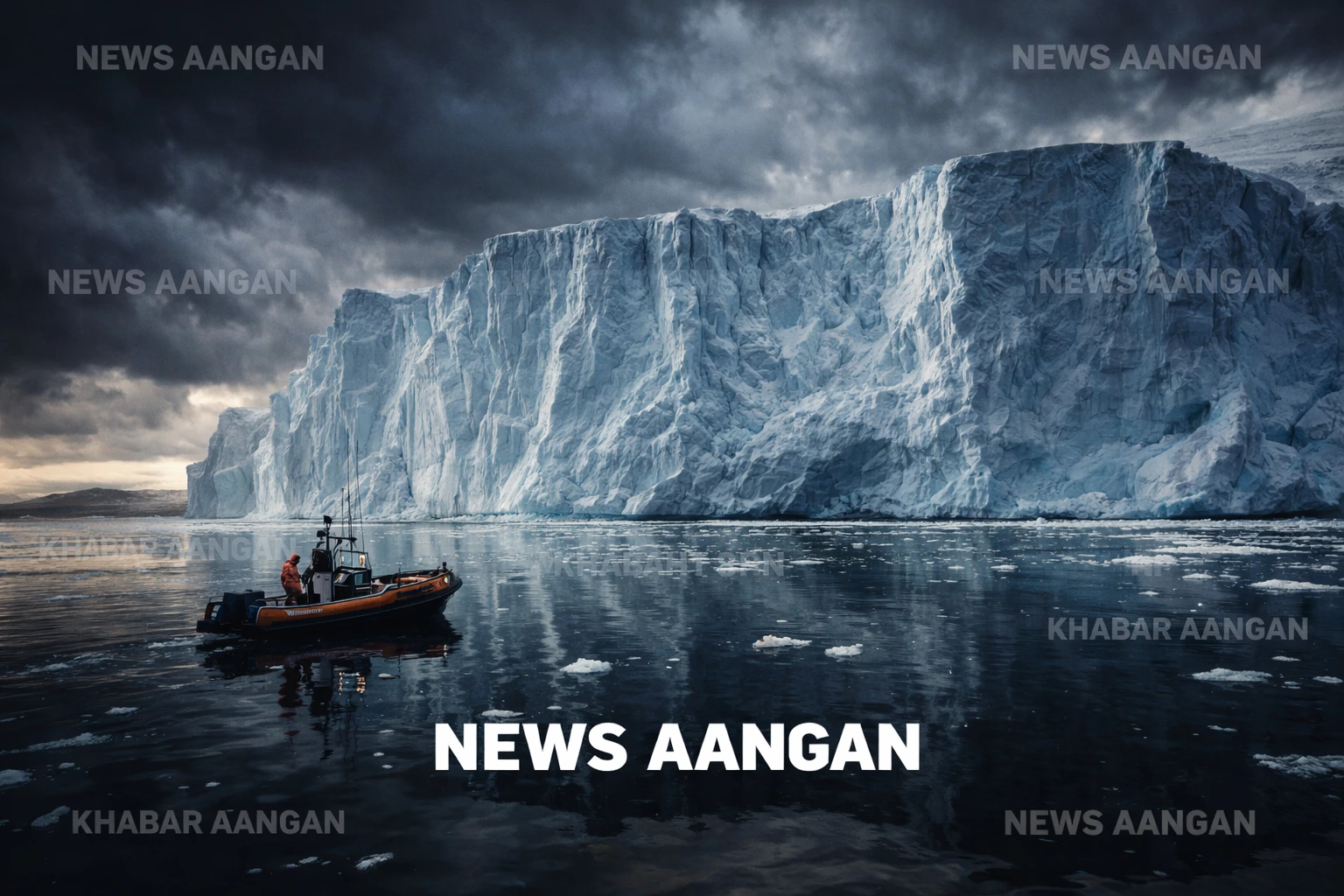
While the political storm rages, a scientific crisis has also unfolded today along the coastline. Research teams have declared a regional emergency after observing unusual orca activity dangerously close to melting ice shelves, a phenomenon that could signal an accelerated breakdown of the Arctic ecosystem.
Scientists have noted that the powerful movements of these pods are acting as moving pistons, churning water against fragile blue ice that is already weakened by record air temperatures. This “moving bridge” of biological activity is literally shaking the foundations of the shelf, leading to truck-sized calving events.
For the local communities, this emergency is a personal one. The fracture of these shelves isn’t just a data point for researchers; it directly threatens the safety of children playing near the cliffs and the stability of the coastal fishing routes that sustain the economy.
Global Solidarity: The European and Nordic Response
The international community has wasted no time in standing behind Nuuk and Copenhagen. From Paris to Helsinki, European leaders have expressed their “solidarity,” affirming that borders cannot be changed by force or symbolic social media gestures.
Nordic neighbors, including Sweden, Norway, and Finland, have put out unified messages of support, stressing that only the people of Greenland and Denmark have the right to decide their future. This regional cohesion is a direct pushback against the idea that any one nation can unilaterally claim the Arctic as its own.
The consensus among analysts is that the risk of territorial grabbing has been “underpriced” by the international community until now. The current situation serves as a stark warning that the principles of territorial integrity are under threat, prompting calls for a stronger, legally binding Arctic protection treaty.





The Road Ahead: Diplomacy vs. Coercion in 2026
As we move deeper into January, the focus remains on whether the rhetoric will transition into actual economic or military action. The next twenty days are seen as a critical window for diplomatic de-escalation, with mediators looking for “proper channels” to replace social media sparring.
Whether Greenland remains an autonomous territory or becomes the center of a new global conflict is a question that will define the international order of this decade. For the residents of the North, the message is simple: their home is not for sale, and their future will not be decided by social media posts or geopolitical fantasies.
The battle for the Arctic has only just begun, and the world is watching to see if respect for international law can hold against the tide of national security ambitions. For now, the ice remains firm, but the political foundation of the region has never felt more unstable.
About the Author

📢 Click here for instant updates:
📲 Join us on WhatsApp